02 · Electric fences
Fences againstwildanimals.
Put the technology to work protecting your beehives or your livestock. Self-contained unit with a 10 watt panel, no battery, with battery charge control. The unit can also be connected to a wind turbine.
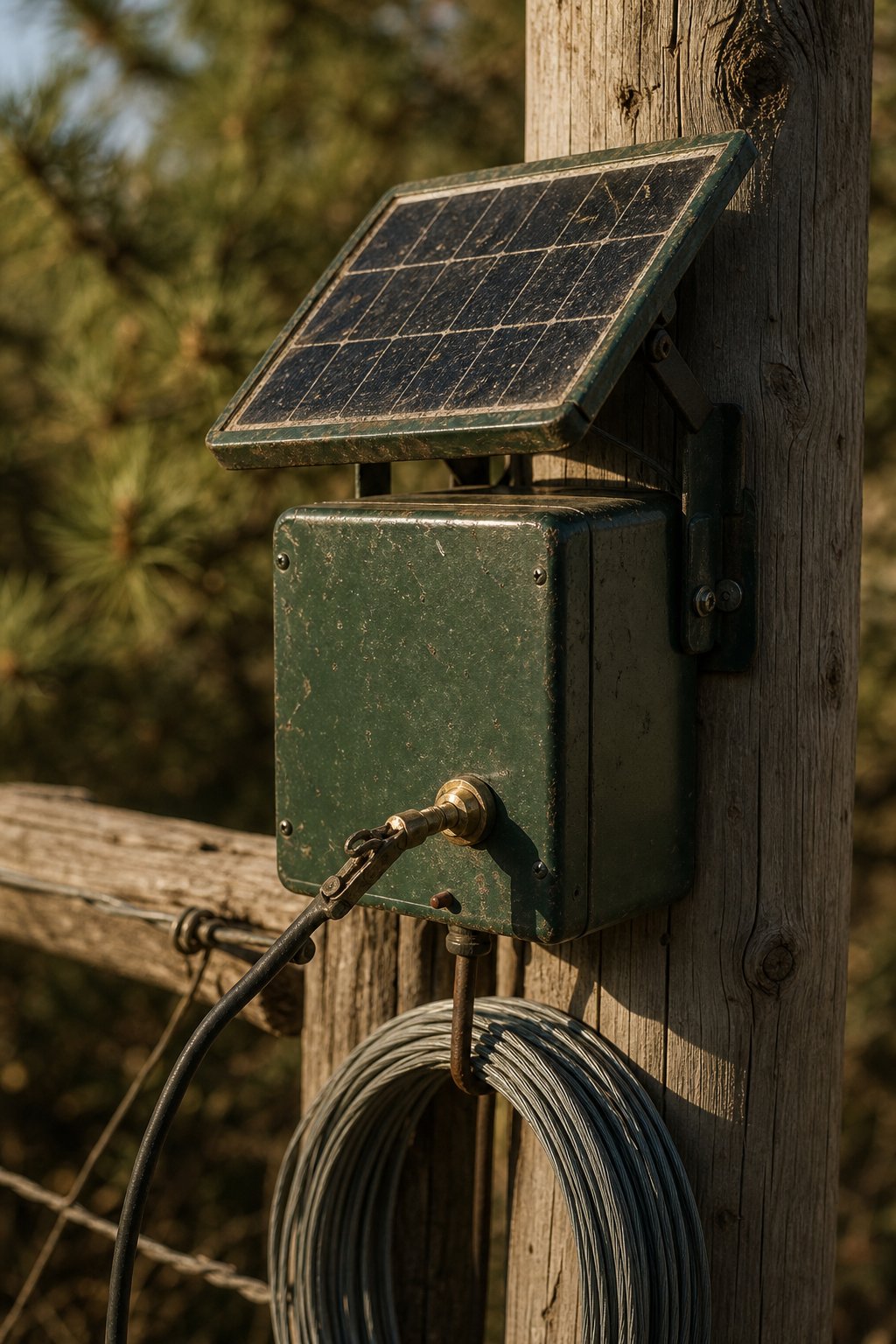
Electric fences
Specification sheet
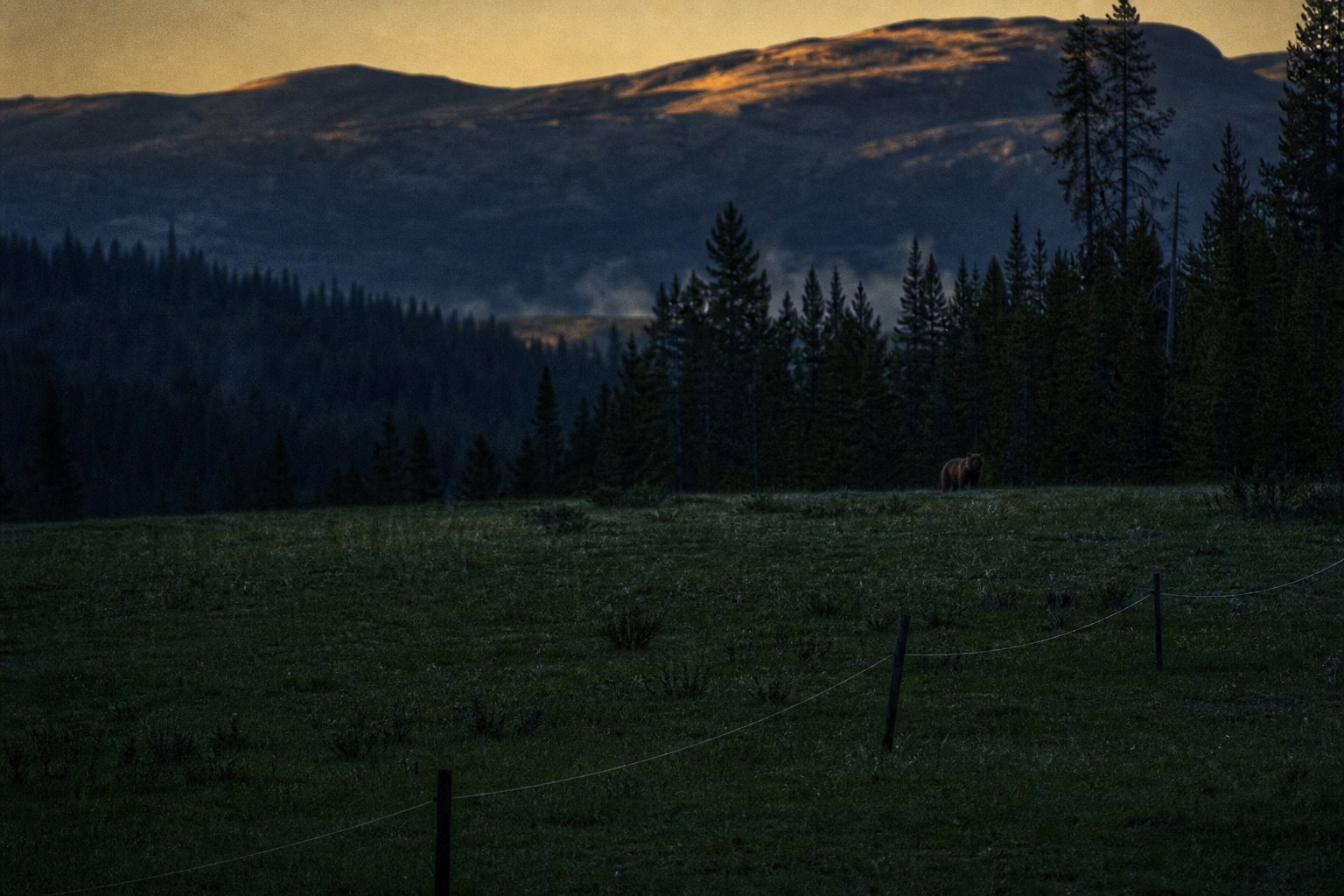
The wire keeps the wild away from the hives — even when you are not there.
Protecting hives & livestock · mountain terrain of Western Macedonia
02.1
How an electric fence works
A fence is not a wall; it is a lesson. The animal touches the conductor, receives a brief pulse and learns to keep its distance from the boundary.
01
The pulse
The unit charges the conductor with short high-voltage pulses at a rate of roughly one pulse per second.
Lasting thousandths of a second: long enough to deter, far too short to hold the animal against the wire.
02
The earth circuit
The circuit closes through the ground and the earth rods returning to the unit.
The better the earth, the surer the shock for an animal touching both wire and ground at once. On dry or stony ground, add extra rods.
03
Conductor & insulators
The wire or tape is held by insulators that stop the voltage leaking into the posts or the vegetation.
Height and number of lines are set for the animal you need to stop — one line at the right height is enough.
Installation in five steps
The order of work that keeps voltage steady from one end of the line to the other.
Walk the plot and mark the entrances, the points where vegetation touches the line and any slopes.
Set the posts at an even spacing and the insulators at the height of the target animal.
Drive the earth rods into damp ground close to the unit and check they make good contact.
Run the wire or tape, tension it well and connect it to the positive terminal of the unit.
Check the whole length with a voltage tester: the reading must stay steady without drops.
Applications
Beehives
Protecting hives from wild animals on mountain pastures and bee sites where daily attendance is not possible.
Livestock
Goats, sheep, cattle and poultry: it keeps the animals inside the boundary and the wild ones outside it.
Farmland
Vineyards, olive groves, gardens and new plantings needing temporary or permanent protection.
Facilities
Waste bins, stables and outbuildings in open areas where animals break in.
Maintenance & advice
- Clean grass and moisture off the insulators: voltage leakage is the most common cause of failure.
- Keep the line tensioned; slack wire touches the posts and loses voltage.
- Wipe the solar panel clear of dust and snow; without charging the unit cannot hold its strength.
- Check the voltage with a tester regularly, especially after a storm or after clearing the line.
Safety
- The pulses are brief and deterrent; still, place warning signs at every entrance.
- Do not touch the conductor while the unit is running and disconnect it before any work.
- Keep the line away from telephone and power cables; on a parallel route keep at least two metres of clearance.
Frequently asked questions
Is it dangerous for people or animals?
The pulse is brief and deterrent, at roughly one pulse per second. It causes no lasting injury, but signage and care during installation are required.
What happens without sun?
The unit runs on 12 V and accepts a solar panel or a wind turbine. It has battery charge control, so it keeps working through periods without charging.
How large a perimeter does it cover?
Depending on vegetation: 20 kilometres on open ground, 10 on medium vegetation and 6 on dense vegetation.
Call us
24610 39926